Sensory Needs and Body Image
I had a client years ago that was describing distress over her recent weight gain. She had always been in a straight sized body (and she still was even with the weight gain), but now her belly would touch the top of her thighs when she sat down. She couldn’t stop noticing it and feeling the sensation of her skin touching skin where it hadn’t before. When I explored why this felt so distressing, I asked her about the baseline sensory input of this body change. Her skin touched another part of her skin. Fabric would touch her in different ways than she was used to. If we strip away all the meaning applied to the body change (ie anti-fat beliefs), does the sensory input cause distress by itself?
I recently had another client who wanted to lose weight because of how her belly interacted with the space around her; her belly would touch her desk or steering wheel when she was driving. This signaled to her that her body was “wrong”, “bad”, and “too big”. Again, I asked her to examine what the sensory experience was like for her with her belly touching parts of her environment. Taking away the meaning, what did it physically feel like on her belly?
What if we are having sensory experiences that we then label and interpret as bad or wrong because we have learned our bodies are too big, are incorrect, or should not have needs? What if these are totally normal parts of having a human body that we have just learned to assign a self-hating meaning to?
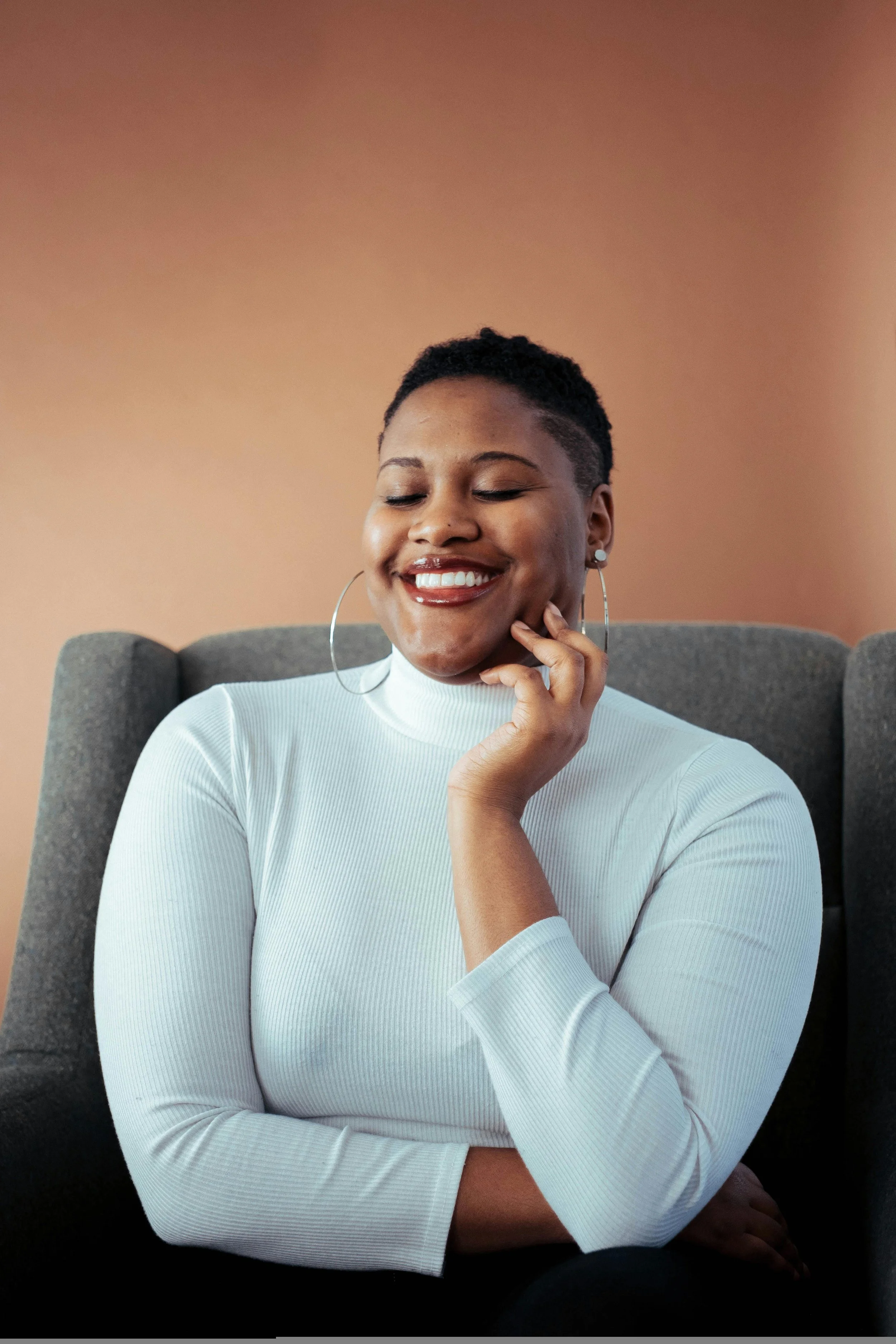
These examples perfectly show when our sensory experiences interact with internalized anti-fatness. And also perfectly show how out of touch we can be about our neutral sensory experiences.
Let’s take a look right now at what your body is doing in its physical environment. Are any parts of your body touching or rubbing against another part of your body? Where does your skin touch other parts of your skin? Can you tell if you’re hot or cold? Are the lights too bright or is there background noise you’re not in control of? These could all be examples of sensory input that can go under the radar. We may not notice what the fabric of the chair feels like on the back of our thighs, but instead we may feel like something is “off” about our thighs. Maybe we don’t pay full attention to our bellies so we don’t have awareness that it hurts when we press against the kitchen counter doing dishes. Instead we feel like our belly is in the way.
What if our interpretation of sensory input is what needs to change, not the sensory input itself?
Earlier this year, I attended a training by RDs for neurodiversity, which is a group I highly recommend. In it, they talked about the experience of trying on clothes in a dressing room. Dressing rooms are sensory nightmares most of the time! They almost always smell like feet, it can feel claustrophobic, the lighting is always rough, and maybe there’s bad music playing on the speakers. You have to interact with salespeople, you overhear other people’s conversations, and it’s just a lot of input! Then you’re trying on clothes which always have inaccurate sizing and you have to look at yourself from angles you don’t usually look at. It’s so easy in this moment to feel like your body is wrong and ugly. But what if you’re actually just having a sensory overload?
So how can we better attune to our sensory needs in order to help our body image?
Sensory profiles or sensory inventories are one of my favorite things to do with clients. It can be so enlightening to discover what sensory inputs you like, what you find overwhelming, and what sensory inputs offer you calm and comfort. You can do this in a pretty simple way- going through each sense, try to name as many things as you can that you avoid or seek out. Of course there are more formal sensory profiles out there, so feel free to comment below or reach out for recommendations.
Here are a few of my sensory preferences to get you started:
-very sensitive to having even lighting to minimize shadows or bright spots
-turned off by strong perfumes or strong cleaning product smells
-hate the smell of jasmine
-seek out touch sensations, like soft pillows or blankets, animals to pet, etc.
-enjoy the light pressure of compressing clothes like compression socks
-sensitive to the weight of necklaces and cannot handle wearing bracelets
Starting with noticing your sensory experiences is key to connecting to your body. It’s trying to communicate with you all the time. Learning to attune to it is a key part of unlearning anti-fatness, or disengaging from diet culture, or liberating from body fascism- whatever you want to call it!!
I want to keep writing about how important body attunement is. And I want to keep writing about all the ways that can be really difficult and even scary to do. Starting with a simple sense, like visual input, may be a gentle way to move forward with it. What visual input do you enjoy and seek out? What tends to overwhelm, distract, or displease you? Do you like a lot of contrasting colors in a room, do you prefer dim lights, or do you avoid fast moving images? Start with that sense since it tends to be neutral and easier to access.
This work is not easy to do on your own, so seeking support on your body journey is typically needed. Comment below or reach out to inquireabout working together. You can also look at ASDAH’s directory or Naglona’s new harm reduction provider directory here.